

This article is written for retail brands showing products through carton windows. It explains window box packaging from a buyer’s point of view: what the packaging should solve, what product advantages matter, and what should be confirmed before ordering.
The focus is practical. A buyer should finish the article knowing how window box packaging can improve product protection, presentation, storage, packing speed, or customer confidence without relying on unsupported claims.
Table of Contents
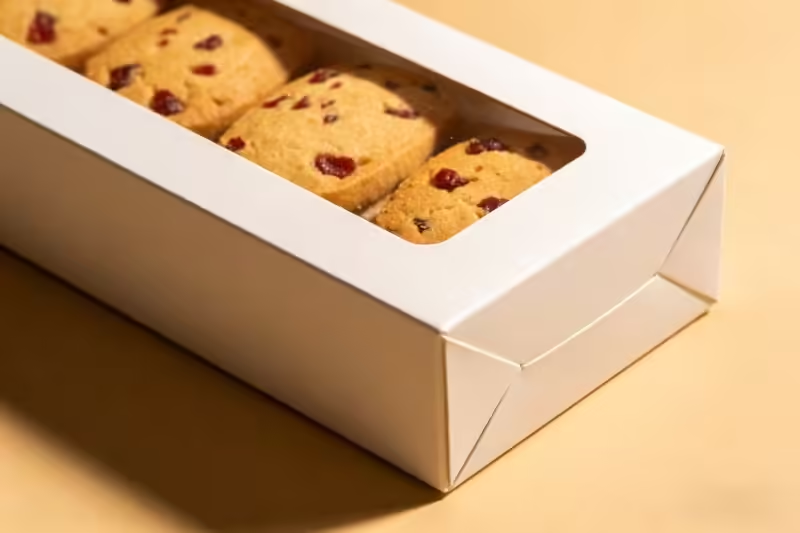
Why window placement matters before buyers order
Window placement is the first practical issue because it shapes whether the package is suitable for the product at all. For window box packaging, buyers should describe the product condition, sales channel, and handling route before asking for samples.
A supplier can make a better recommendation when the buyer explains how window placement affects the order. For window box packaging, that may point to a structure, material, or insert choice that fits the product better than a generic box size.
How panel stiffness changes the product fit
Panel stiffness affects the way the product sits inside the box. If panel stiffness is handled too tightly, packing becomes slow or surfaces may rub; if it is handled too loosely, the product can shift and make window box packaging feel careless.
For a purchasing customer, panel stiffness is where product advantage becomes visible. Good window box packaging should make the item feel deliberately packed, not forced into a box or lost in empty space.
Where film clarity creates a product advantage
Film clarity is where packaging can become a real product advantage. In a window box packaging project, the right structure should make the item easier to display, safer to ship, faster to pack, or more convincing when the customer opens it.
Film clarity is also where buyers should compare packaging products instead of only comparing dimensions. For window box packaging, the best option should solve the specific customer problem created by this detail.
For window box packaging, buyers can compare a color printing packaging box with a colored paper box. These examples connect the purchasing question to actual packaging structures on the site.
What customers notice about product visibility
Customers may not use packaging terminology, but they notice product visibility. In window box packaging, they notice whether the box opens cleanly, whether the product feels secure, and whether the brand presentation matches the product they expected to receive.
That customer reaction matters commercially. In window box packaging, if product visibility makes the product easier to trust, identify, or open, the packaging supports the sale rather than acting as a disposable container.
How to discuss fold clearance with a supplier
When discussing fold clearance, buyers should give the supplier product dimensions, packed weight, artwork expectations, and photos of the intended arrangement. Clear information helps the supplier recommend a practical structure instead of guessing.
The buyer should also explain order volume, sales channel, and whether window box packaging is for direct shipping, retail display, gifting, or inner protection. Those details change what the package should prioritize.
When label area should guide window box packaging material choice
Label area can influence board type, surface paper, insert design, or printing method. Buyers should ask why label area requires a recommended material and whether a simpler option would still satisfy the product’s real use case.
A professional window box packaging decision should connect material choice to a buyer benefit. Around label area, that benefit may be protection, cleaner printing, easier storage, faster assembly, or stronger shelf presentation.
How stacking affects packing work
Stacking matters in daily operations. A window box packaging sample that looks good in a meeting can still fail if staff need too much time to fold, fill, label, or close it during normal order volume.
Samples for window box packaging should be tested by the people who pack orders, not only by the design team. Their feedback shows whether stacking works under normal warehouse or fulfillment conditions.
How to approve sample review in the final sample
The final sample should be reviewed with the actual product, normal accessories, inserts, labels, and packing method. For window box packaging, approval should be based on the complete packed experience, not an empty box.
Before bulk ordering, buyers should record the approved size, structure, product position, and notes about sample review. That record makes repeat orders of window box packaging more reliable.
