

This guide helps food brands separate practical packaging decisions from unsupported safety claims. The focus keyword is food-safe paper packaging, and the guidance is written for buyers who need practical decisions rather than broad packaging theory.
Good food-safe paper packaging decisions depend on product measurements, material behavior, packing workflow, and customer expectations. A clear brief helps the supplier quote accurately, prepare useful samples, and avoid preventable revisions.
Table of Contents
Start with direct or indirect food contact
A box that touches food directly has different requirements from an outer retail carton that holds a wrapped product. Buyers should define the contact situation before discussing material. This point should be checked as part of the food-safe paper packaging specification rather than treated as a late design detail.
Match structure to moisture and grease exposure
Dry bakery products, pizza, produce, and wrapped retail foods do not create the same packaging conditions. The structure and surface treatment should match the expected use. This point should be checked as part of the food-safe paper packaging specification rather than treated as a late design detail.
Buyer checkpoint
Before approving food-safe paper packaging, compare the sample with the product, packing route, and customer use case. Written notes are more reliable than verbal approval when the order is repeated later.
Keep claims accurate and documented
Do not claim certification, compostability, recyclability, or food-contact approval unless documentation exists for the actual material and supplier. Conservative wording protects both the brand and the customer. This point should be checked as part of the food-safe paper packaging specification rather than treated as a late design detail.
| Planning area | Question to ask | Practical reason |
|---|---|---|
| Product fit | Does the packed product sit securely? | Reduces movement, pressure, and awkward presentation |
| Material | Does the board match the product and route? | Supports strength, print result, and handling |
| Workflow | Can staff pack it repeatedly? | Protects fulfillment speed and consistency |
| Customer experience | Does it open cleanly after handling? | Supports a professional brand impression |
Plan ventilation and presentation
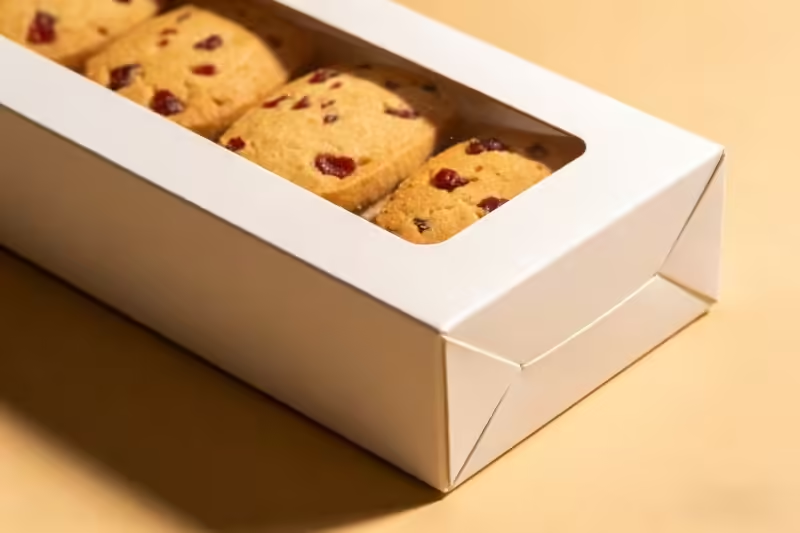
Some foods need ventilation to reduce condensation, while others need closed protection from dust and handling. Window placement, lid design, and vent holes should be chosen for the product. This point should be checked as part of the food-safe paper packaging specification rather than treated as a late design detail.
Use product references carefully
For takeaway use, custom pizza boxes provide a relevant reference. For wrapped food gifts or retail presentation, a paper gift box can help discuss structure and display. This point should be checked as part of the food-safe paper packaging specification rather than treated as a late design detail.
Buyer checkpoint
Before approving food-safe paper packaging, compare the sample with the product, packing route, and customer use case. Written notes are more reliable than verbal approval when the order is repeated later.
Review labeling and handling information
Ingredient labels, storage notes, barcodes, and recycling marks need clear space. Packaging artwork should not make required information hard to read. This point should be checked as part of the food-safe paper packaging specification rather than treated as a late design detail.
- Review real product samples, not only drawings.
- Use two relevant product-page internal links naturally in the article body.
- Avoid competitor brands, specific prices, and unsupported claims.
- Keep the article in standard Gutenberg blocks with clear heading hierarchy.
Approve samples under realistic conditions
The sample should be checked with the actual product or a realistic substitute. Look for staining, softening, odor, closure problems, and customer handling issues. This point should be checked as part of the food-safe paper packaging specification rather than treated as a late design detail.n consult public references such as paperboard, corrugated fiberboard, FSC, and ISTA while avoiding unsupported claims.
